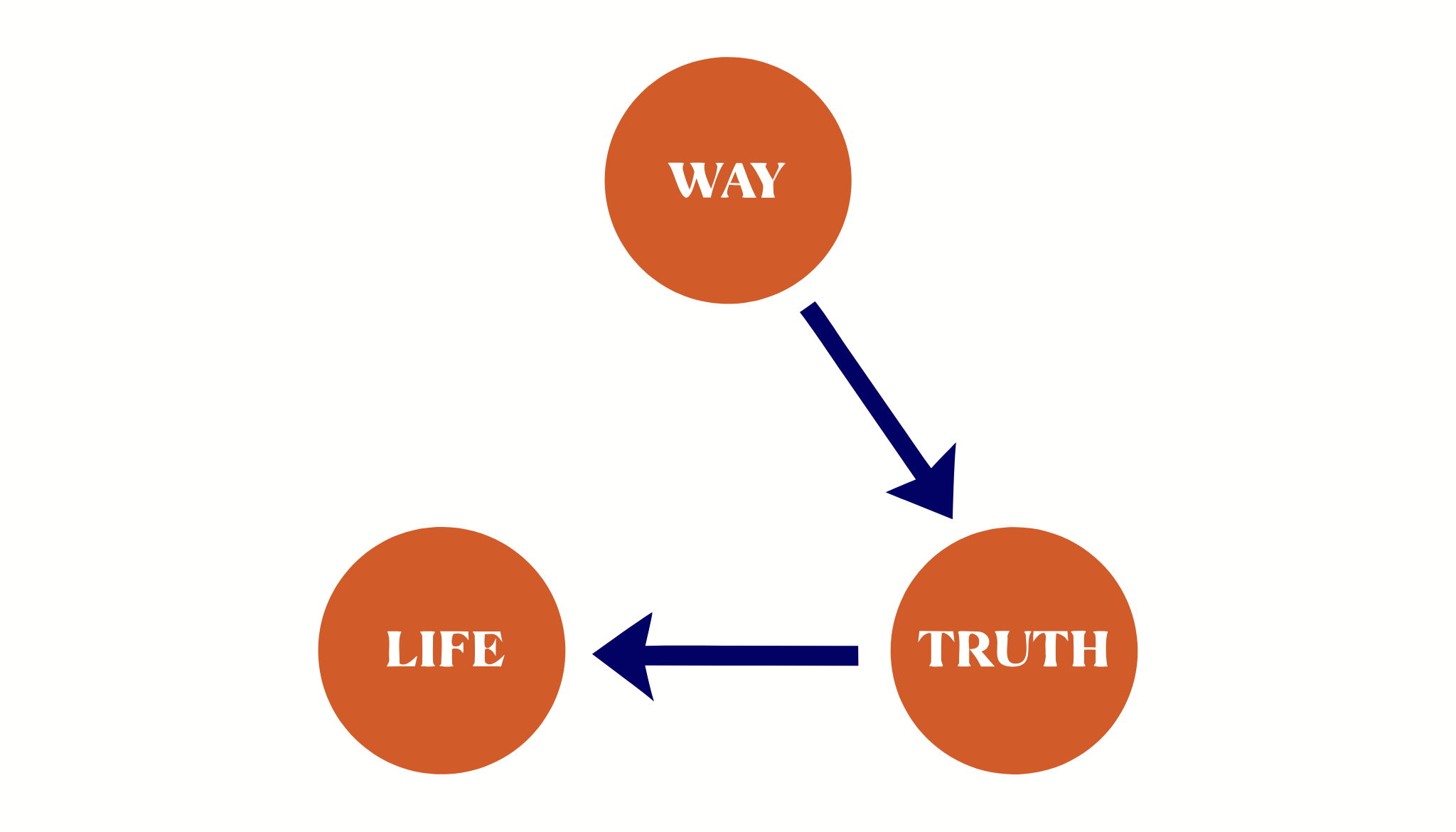
I'm pretty sure that the order of Way, Truth, and Life matters. And Way comes first.
The way we live shapes what we believe is true, and together those produce a life worth living. I'm not arguing that this is what Jesus intended when he said "I am the way, and the truth, and the life" in John 14:6. I'm borrowing his words because they give a helpful shape to something I've been chewing on.
Way first
When Jesus calls his disciples, he calls them first to a way of life. He does not call them to a set of beliefs. "Follow me" is an invitation to walk somewhere and do something. And it's through living the way Jesus lived (a Jesus-shaped life, as Bob Rognlien would put it), that our truth gets formed. Our beliefs, the thing we usually call faith, are shaped by the way we live our lives. (In reality, I think faith is a mix of practice plus beliefs, but you get the point.)
A lot of these thoughts come from reading Gustavo Gutiérrez's A Theology of Liberation. For Gutiérrez, theology is critical reflection on practice. Theology is not theology if it is not deeply connected to practice. Aaron Niequist gets at the same thing when he talks about a practice-based faith.
James K. A. Smith makes a similar move in Desiring the Kingdom. Our practices, our liturgies, shape what we love, and what we love shapes what we believe. By liturgies he doesn't only mean what happens in a worship service. He means all the things we do as we go through the motions of life. So if you want to change your beliefs, you start with your desires, and you get at your desires through the things you're actually doing with your life.
But so many flavors of Christianity, at least the conservative ones I've been a part of, put beliefs first. The main question is whether you believe the right things.
I ran into this just today. I was working on a new beliefs page for our church website, and I think beliefs pages on church websites are kind of weird. When it says "we believe," who's the we? The staff? The pastors? The congregation? I'd assume not everybody in a congregation believes all the same things. If they did, I'd want to know what you did to convince them all to believe exactly the same things. You probably had to force them to conform. And unfortunately, so many churches do force belief conformity.
Now, I'm not saying beliefs don't matter. I have argued before, probably on this very blog, that theology is life-and-death stuff. Bad theology kills. What we believe has an effect in the world, and it can brutally, brutally harm people. My point is about order. What Jesus calls us to is a way of life, and it's that way of life that then shapes our beliefs.
Getting the order wrong
So Way leads to Truth. Our practice shapes what we think about reality and the world. Then Truth shapes the whole of our lives, which is where Life comes in. Or maybe better, Life is what the whole thing produces: zoē, thriving, something healthy and growing, well-being.
If you get these in the wrong order, things go bad.
Start with Life—chase growth and well-being with no concern for Truth or Way—and you're basically growing cancer on purpose. That's capitalism and the myth of infinite growth. It's caring about your own thriving and nobody else's.
Start with Truth and skip practice, and that has bad fruit too. These are the people who will bludgeon women or poor people or queer people and say, "Hey, the Bible says it, that settles it." They care about Truth above all else, so they don't care that their theology harms people in awful, awful ways.
Starting with practice only works if the practice is shaped by a set of values. Not every way of life leads to life.
John helps here. "I am the way, and the truth, and the life" comes in John 14, during Jesus's last long conversation with his disciples before his arrest. A few chapters earlier, in John 10, Jesus says, "The thief comes only to steal and kill and destroy; I have come that they may have life, and have it to the full." It's the same word for life in both places, zoē.
So if we want life, life to the full, we need a way of life that isn't about stealing, killing, and destroying. We need a way that isn't shaped by the things the thief does.
Practically, I think that means our faith communities have to be Way-driven, from the large group gathering on Sunday to a small group or a friend group or whatever. The invitation is to identify with a set of practices shaped around not stealing but giving, not killing but bearing life, not destroying but creating.
If you are dedicated to giving and life-giving and creating, your perspective on Truth is going to change. Your beliefs are going to change. You will see people in a different way.