Disclosure: Rohadi is an online friend, and I received a free copy of this book in exchange for an honest review.
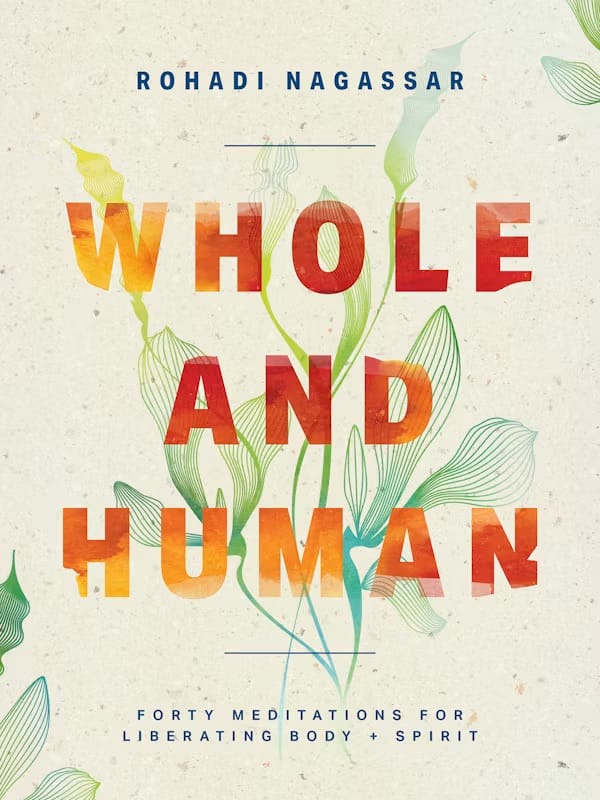
Most devotionals ask you to retreat into your soul. Whole and Human sends you back into your body. Across forty meditations organized around the five senses—and the threads of land, body, spirit, and justice—Rohadi Nagassar argues that spiritual growth that never reaches the body isn't really growth at all.
What sets it apart is what it refuses to do. It doesn't shame queer people. It doesn't look past climate or injustice. It starts from our inherent goodness rather than our supposed depravity, and it insists that liberation is not only liberation from but liberation to—toward flourishing.
It also has teeth. Nagassar names James Dobson's parenting empire as a machine that "enmeshed eugenics, white supremacy, and patriarchy for consumption in Christian households worldwide." He reads Revelation's lukewarm church as a rebuke of the mushy middle of centrism and our reflexive both-sidesism. He says plainly that "Jesus' political engagement got him lynched by the state" — and that this obligates us. "If love is the ethic, justice is the means."
The quieter lines landed just as hard. "Grief is not a problem to fix." I underlined something on nearly every page.
This is a devotional for anyone who suspects their faith was always meant to include their body, their neighbor, and the ground under their feet. Worth repeating, and worth pressing into other hands.