


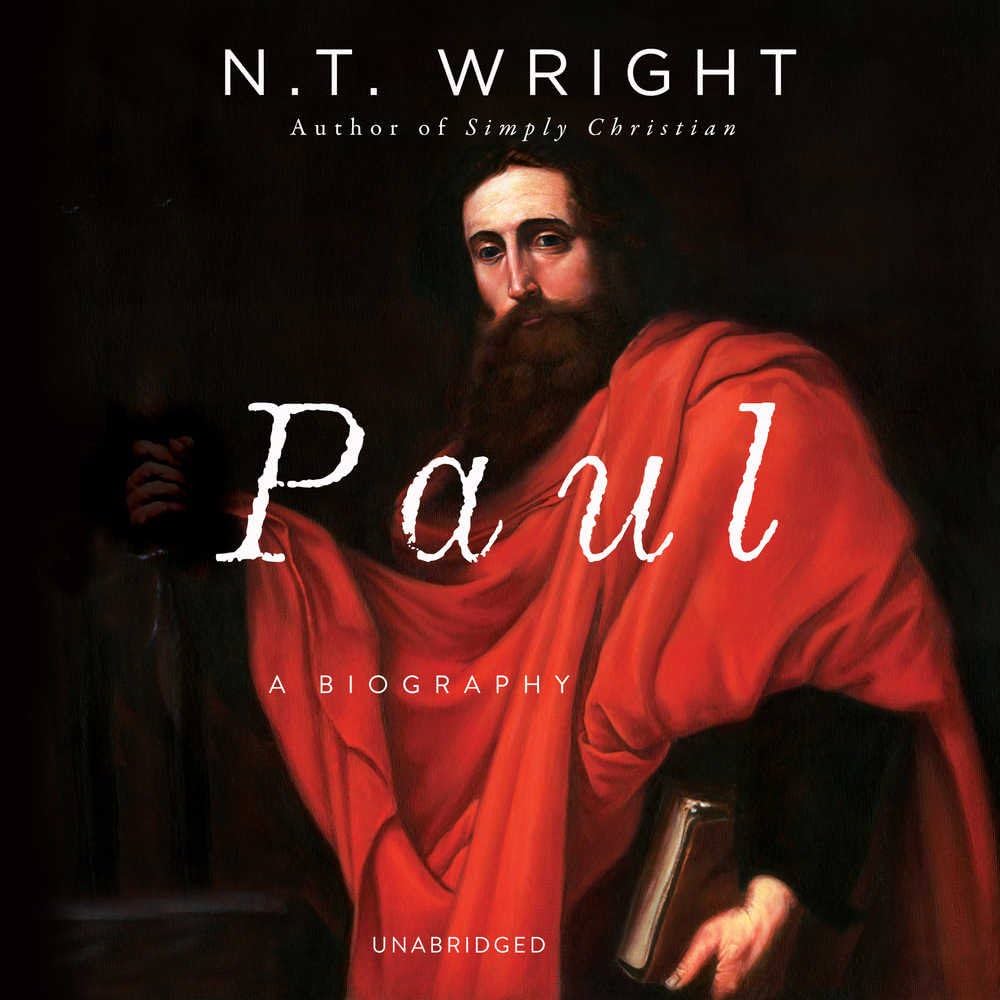
Author: N. T. Wright
Rating: 6/7
Date Finished: 2026-01-12
Paul is both disliked and misunderstood. Even the Bible itself admits that Paul's writings get twisted and misread. He's blamed for misogyny and homophobia, turned into a villain in the broader cultural imagination.
But confession: I've always loved Paul. When I was adopted at age 13 and got to choose a new middle name, I chose Paul. That's how much I loved him.
Paul dedicated his life to creating communities that had never existed before—communities of radical egalitarianism and equality, built on a foundation of love. He was so compelled by his encounter with Jesus that he gave his every moment to announcing the gospel of the kingdom and embodying it. He made the church a colony of heaven in a kingdom of death.
Wright's biography of Paul is a great read. I breezed through it in six days. It helps that I'm familiar with Wright's work, but he doesn't assume that of the reader. He explains the necessary context and background for understanding Paul and first-century Judaism without being condescending.
I think what makes me relate to Paul so hard is his fairly consistent concern: Is this all worth it? Will all my work be in vain? With churches always at risk of falling into paganism or legalism, Paul was right to be concerned. I struggle with the same question. When spiritual transformation is so slow, hard to see, invisible, unmeasurable—or worse, when people actually reject the gospel—it can all feel like a waste.
But Paul was relentless. The original Alexander Hamilton. How do you write like you're running out of time? Always on the move. Speaking his mind, brash, sometimes abrasive. Getting so much accomplished. (I'll admit to looking up to both Hamilton and Paul for these reasons. And yes, I am an Enneagram 3—why do you ask?)
Paul is also someone who makes me question any complaining about "being divisive" or demands to "be nice to people who disagree with you." Paul seemed perfectly content to be divisive and call out the BS of his opponents.
Wright handles the historical questions deftly. He doesn't overplay his hand when the sources are unclear. Did Paul go to Spain? How did he die? Why does Acts end the way it does? We just don't know. Wright has some guesses, and they're fascinating to read, but he holds them loosely.
If you have any interest in understanding Paul as a real historical person—and not the caricature of a misogynistic, homophobic, self-hating Jew—this book is for you.


Discussion