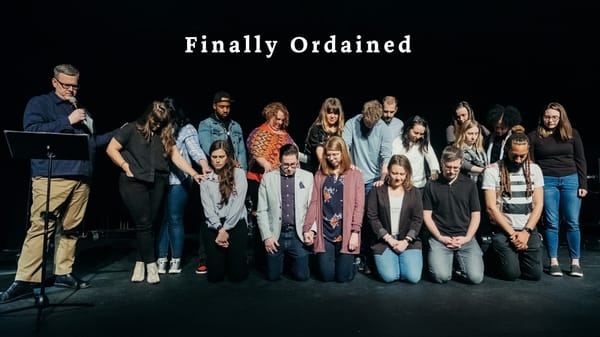
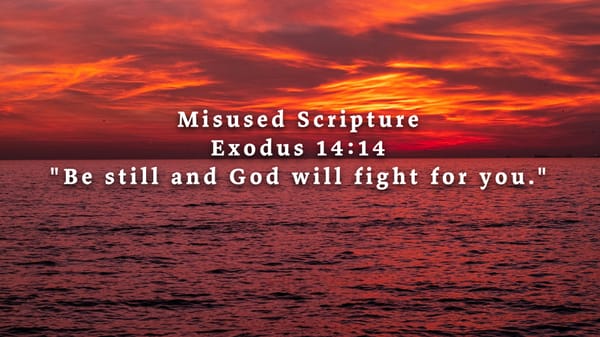
To see the world solely from our own perspective, our own experience is a sort of prison. It's not that our experience is always invalid or wrong. But it's not the only perspective in the world. It may, in fact, be the perspective of very few.
The task of learning, then, is to humble ourselves to learn from others. To hear perspectives other than my own. To admit that I am the expert of my own experience, but not of someone else's. And when I draw conclusions on what is true, I cannot do so based off of the perspective I like best or sounds most like my own. I must be willing to admit when I was wrong, when I have something to unlearn.

Read Next
This passage isn't about God punishing you for taking communion wrong. It's about what happens when the wealthy eat and the poor go hungry.
Certain ideas get so deeply embedded in the tradition—repeated so often, sung so confidently—that no one stops to ask whether the original actually says what we think it says.
This week: why Paul would kick someone out of church, the chaos monster hiding in your Bible, and what to call a group of TSA agents.
When most people hear "Kingdom of God" or "Kingdom of Heaven," they think of the afterlife. They think of where you go when you die. They think of clouds, harps, and a gated community in the sky. That's not what Jesus was talking about. Not even close.
Subscribe to Parrott.ink
I write about the Bible, books, and what it means to be human — with a bias toward love and liberation. Free subscribers get two emails a week. Paid subscribers get a third, plus access to everything on the site.
Discussion